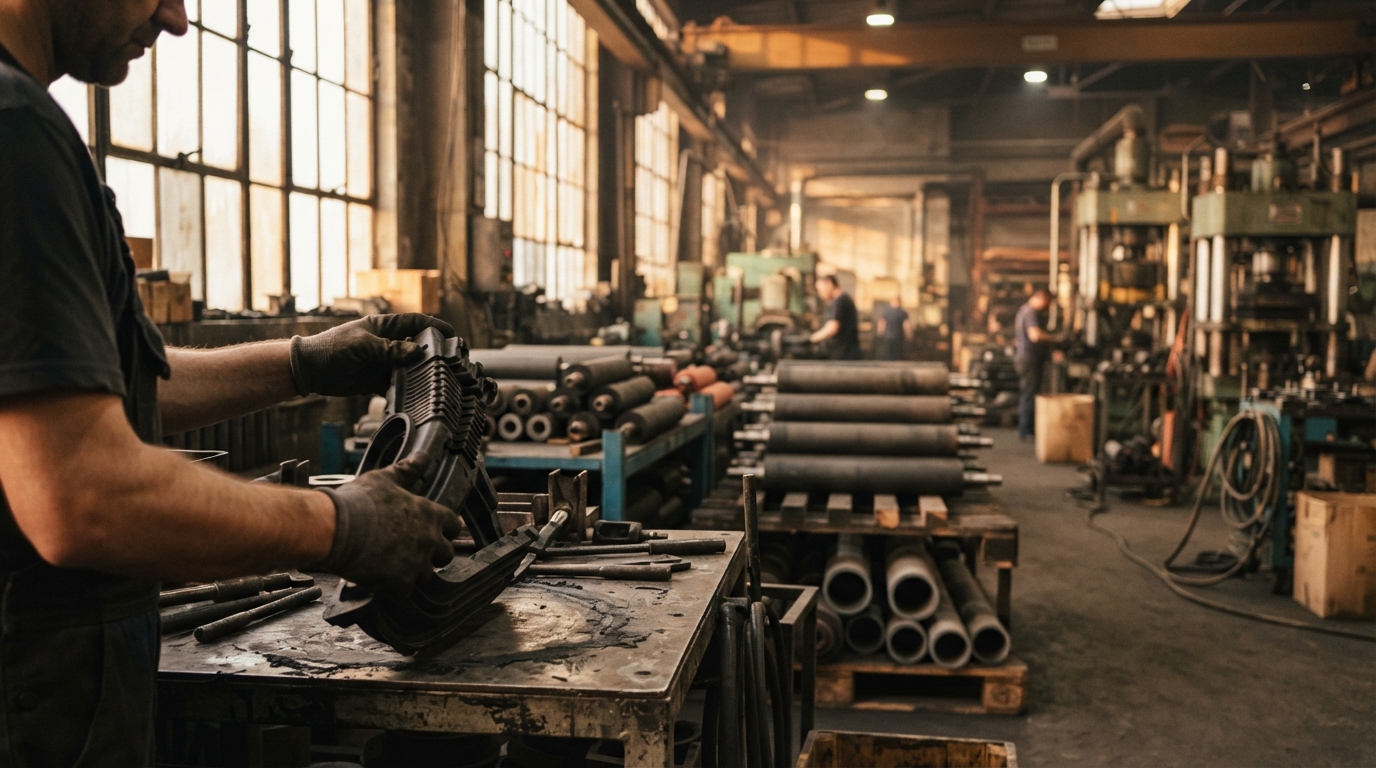
• A reliable custom molded rubber manufacturer in Franklin, LA should offer in-house molding, verifiable industry experience, and material options suited to demanding offshore and industrial conditions.
• Mark Tool & Rubber Co. Inc, based in Franklin, has produced molded rubber and urethane products for oil, gas, and marine applications since the 1950s.
• Look for a manufacturer that can document its process, material choices, and quality controls before committing to a large order.
Manufacturers in Louisiana’s oil, gas, and marine corridor need rubber components that hold up under heat, pressure, and saltwater exposure. Finding a Custom Molded Rubber Manufacturer Franklin LA businesses can trust starts with checking how long a company has operated locally, what materials it works with, and whether it can back up claims with a documented production process rather than marketing language alone.
Mark Tool & Rubber Co. Inc is one of the longer-standing manufacturers serving this niche from Franklin. The company traces its roots to 1954, when it began as a downhole-cutting tool service before shifting toward rubber coatings and molded products by 1969. That history matters in industrial manufacturing, where buyers often rely on a supplier’s track record to judge whether a mold, seal, or roller will perform consistently under repeated stress.
What to Look for in a Rubber Molding Partner
Not every shop that advertises “custom rubber” can handle demanding offshore or petrochemical specifications. Before selecting a manufacturer, industrial buyers should confirm a few operational basics.
• In-house molding capability, including injection molding and compression molding, rather than outsourced subcontracting
• A documented range of material options, since different applications call for different elastomers
• Experience with the specific end use, whether that is marine, oilfield, or general industrial equipment
• Clear communication on lead times, since custom mold complexity affects turnaround
According to the U.S. Department of Energy’s Gulf of Mexico overview, offshore infrastructure in the region requires components engineered to withstand corrosive marine environments, which is why material selection and coating quality are not minor details for buyers sourcing rubber parts for this sector.
Materials and Applications Commonly Used in Custom Molding
Rubber compound selection affects how a molded part performs once it is installed on a rig, pipeline, or piece of processing equipment. Buyers should understand the tradeoffs before specifying a material.
|
Material |
Typical Use Case |
Key Advantage |
|
Neoprene |
General industrial seals and gaskets |
Balanced resistance to oil, weather, and abrasion |
|
EPDM |
Outdoor and weather-exposed parts |
Strong resistance to ozone and UV degradation |
|
Silicone |
High or low temperature environments |
Stable performance across extreme temperature swings |
|
Polyurethane |
Rollers, pipe spacers, wear pads |
High abrasion and tear resistance |
A manufacturer’s ability to work across these material families signals flexibility for projects ranging from a single custom gasket to a full run of pipeline rollers. Facilities that support both compression and injection molding processes can typically accommodate a wider range of part geometries and order volumes without switching vendors mid-project.
Evaluating Local Manufacturing Capacity
Sourcing locally within Louisiana’s industrial corridor can shorten lead times and simplify logistics for companies operating rigs, barges, or processing plants along the Gulf. A Franklin-based manufacturer with decades of regional presence is more likely to understand the practical demands of splash zone exposure, pipeline coating needs, and marine equipment wear patterns than a distant supplier unfamiliar with Gulf operating conditions.
Buyers should also ask whether a manufacturer offers customization on dimensions, hardness, and material composition, since standardized parts rarely fit specialized offshore or processing equipment without modification. Warranty terms and defect-resolution processes are worth confirming in writing before placing a large or recurring order, since these details affect long-term cost if a molded part underperforms in the field.
Frequently Asked Questions
How long does custom rubber molding typically take? Production timelines vary based on mold complexity and material selection, and can range from a few days to several weeks once project details are confirmed with the manufacturer.
Do custom rubber products require special certifications? Most custom rubber manufacturing does not require special permits, though certain industries may call for specific compliance documentation depending on the end application.
What materials are commonly used for offshore rubber parts? Neoprene, EPDM, silicone, and polyurethane are common choices, each selected based on temperature exposure, abrasion resistance, and environmental conditions at the installation site.
Can rubber parts be fully customized for size and design? Yes, reputable manufacturers typically allow customers to specify size, design, and material requirements so the finished part matches the exact application.
Selecting a rubber molding partner in Franklin comes down to verifiable experience, material versatility, and a transparent production process. Buyers who confirm these details upfront reduce the risk of delays or part failure once components are in service. For companies weighing local suppliers, Mark Tool & Rubber Co. Inc‘s long operating history in Franklin offers one point of reference worth reviewing alongside other regional manufacturers.