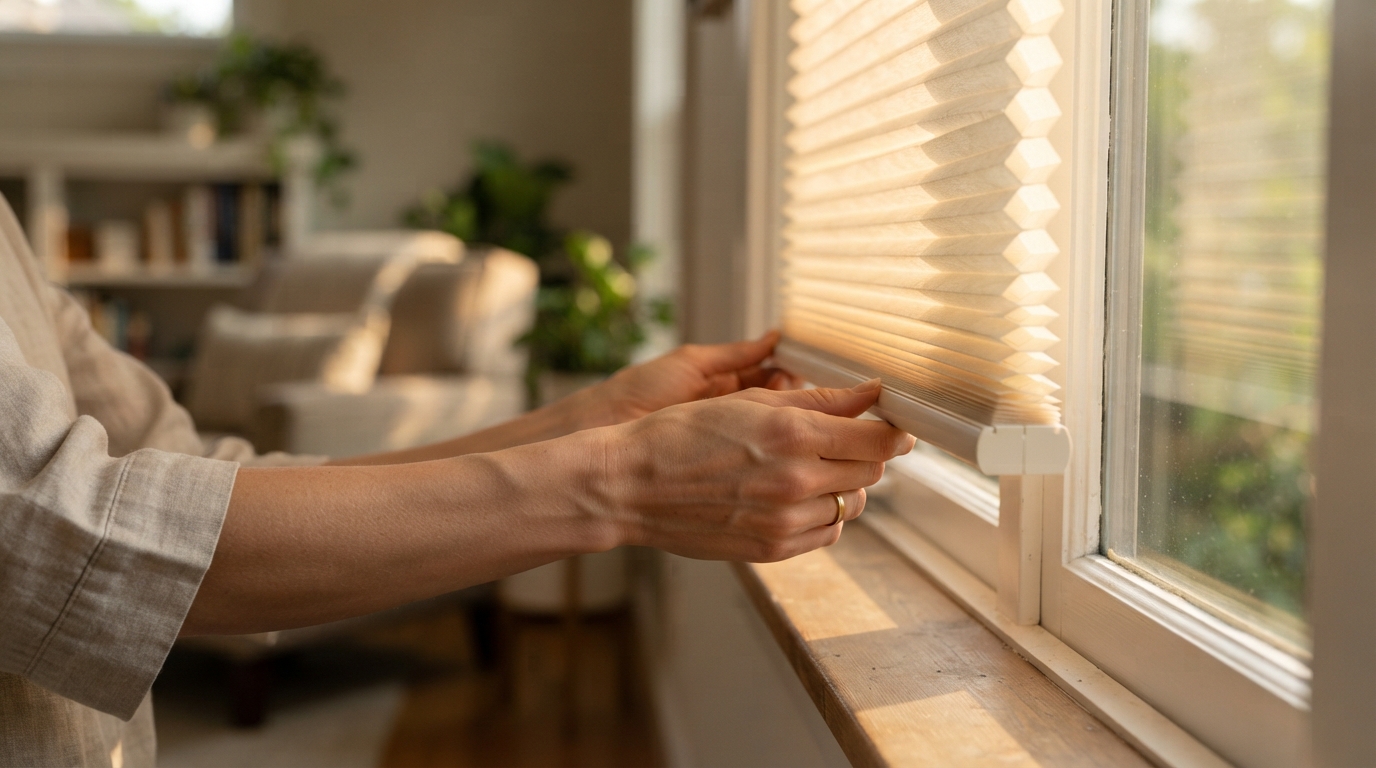
Takeaway:
- Custom window shades are built to exact window measurements, offering tighter light control and insulation than stock blinds.
- Shade types such as cellular, roller, Roman, and solar styles each serve different light, privacy, and heat-reduction needs in Tempe, AZ homes.
- Material and mount choice matter more in desert climates, where UV exposure and heat gain affect both comfort and energy costs.
Custom window shades are window coverings manufactured to the precise dimensions of a specific window opening, offering better fit, light control, and insulation than off-the-shelf options. For homeowners weighing style against energy performance, this distinction shapes which shade type and mount style make sense for a given room.
Off-the-shelf shades are sized in standard width increments and often leave gaps at the edges of a window frame, which lets light and heat seep through. Custom Window Shades in Tempe, AZ are measured and built for a single opening, which reduces those gaps and allows for more precise light filtering, blackout coverage, or privacy depending on the room’s purpose. This fit also matters for irregular or oversized windows common in newer Arizona construction.
Shade Types and What They Do Best
Not every room calls for the same shade style. Matching the shade to the window’s exposure and the room’s function is the first step in narrowing choices.
- Roller shades: flat, simple operation, good for a clean modern look and moderate light control.
- Cellular (honeycomb) shades: layered air-pocket construction that adds insulation value beyond most other shade styles.
- Roman shades: fabric-forward, folds neatly when raised, suited to living and dining rooms.
- Solar shades: screen-style fabric that filters UV glare while preserving an outward view.
Energy Performance in a Desert Climate
Heat gain through windows is a significant factor in cooling costs across the Phoenix metro area, and shade selection can measurably offset that load. The Department of Energy estimates cellular shades can reduce heat loss through windows by up to 40 percent in winter and reduce unwanted solar heat gain by up to 80 percent in summer when properly fitted and operated. For readers in Tempe, AZ, where summer cooling costs dominate utility bills, this heat-gain reduction is often the more relevant figure than winter heat retention.
The U.S. Department of Energy’s ENERGY STAR program also notes that a standard double-pane window allows approximately 75 percent of the sun’s heat into your home, which underscores why shade selection and mount type carry real weight in hot-climate homes, not just aesthetic value.
| Shade Type | Light Control | Insulation Value | Best Rooms |
| Roller Shades | Moderate | Low to moderate | Kitchens, home offices |
| Cellular Shades | High | High | Bedrooms, west-facing rooms |
| Roman Shades | Moderate to high | Moderate | Living rooms, dining areas |
| Solar Shades | Glare reduction | Moderate | Sunrooms, patio-facing windows |
Material and Mount Considerations for Tempe Homes
Material choice affects durability under direct sun exposure as well as how a shade reads visually against a room’s finishes. Faux-wood and vinyl-backed fabrics tend to hold up better than natural fibers in rooms with long daily sun exposure.
- Inside-mount shades sit within the window frame for a streamlined look but require precise, custom measurements.
- Outside-mount shades cover the full frame and surrounding wall, which can block more light and heat at the edges.
- Cordless and motorized lift systems reduce visible hardware and are increasingly common in bedrooms and homes with children or pets.
- UV-resistant fabrics reduce fading on floors and furniture positioned near south- or west-facing glass.
Homes throughout Tempe, AZ face long stretches of direct sun for much of the year, which makes UV-resistant fabric and tighter frame fit practical priorities rather than optional upgrades.
Frequently Asked Questions
What is the difference between custom and standard window shades? Standard shades come in fixed width increments and may not fit a window opening precisely, while custom shades are measured and built for one specific window, reducing light gaps along the edges.
Which shade type offers the most energy savings? Cellular shades generally provide the highest insulation value among common shade styles due to their honeycomb air-pocket design, as noted by Department of Energy research cited above.
Do custom shades require professional installation? Professional installation is commonly recommended for custom shades, particularly for motorized systems or oversized windows, to ensure proper fit and operation.
How long does custom shade fabrication typically take? Production timelines vary by manufacturer and fabric selection, so homeowners should confirm lead times directly with a provider before ordering.
Business Information and Next Steps
Based in USA, Arizona Shutter Company serves customers across Tempe, AZ with custom window treatment offerings.
Readers can Visit Website for published service area and contact details.