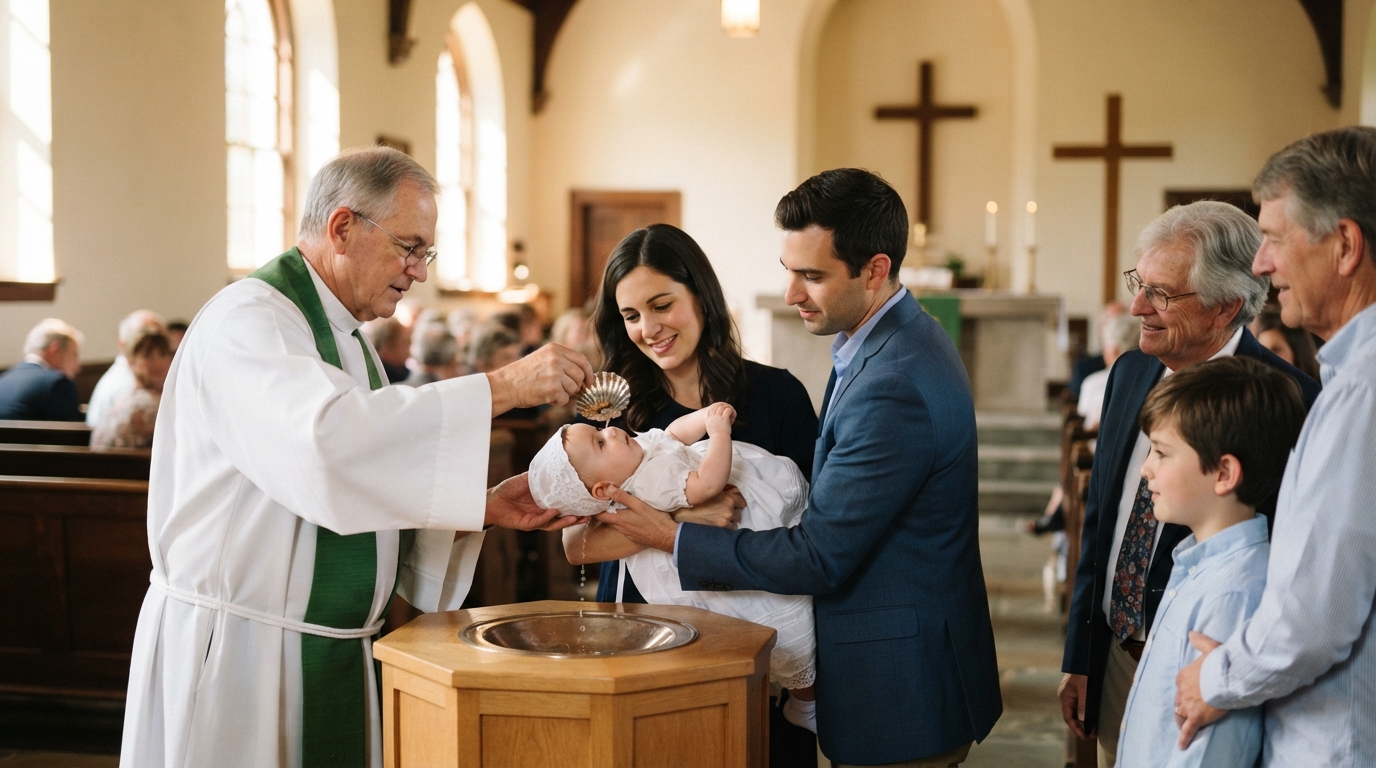
• A congregation provides structured teaching, community accountability, and shared practices that shape ethical decision-making over time.
• Moral formation through religious community typically combines worship, study, service projects, and mentorship rather than any single activity.
• Residents of Merritt Island, FL can access these resources through organizations based in USA, including congregations that offer both in-person and online participation.
A Church functions as a moral compass by combining teaching, communal accountability, and consistent practice into a single framework that individuals can return to throughout life. This structure matters because ethical habits form gradually, through repeated exposure to shared values rather than isolated lessons. For residents weighing how to build or reinforce a personal ethical framework, understanding the specific mechanisms involved can clarify what to look for in a congregation.
Religious organizations such as Click here typically structure moral formation around a few core components that reinforce one another over time.
Core Elements That Build Ethical Grounding
Moral guidance within a congregational setting rarely comes from a single source. Instead, it tends to combine several recurring elements that reinforce each other across weeks and years.
• Teaching and scripture study : Regular instruction gives members a consistent reference point for evaluating decisions.
• Communal accountability : Participating in a group setting introduces social reinforcement, since members observe and discuss how principles apply to daily situations.
• Service and outreach : Volunteer projects translate abstract values into concrete action, which research on civic behavior links to stronger community ties.
• Mentorship relationships : Pairing newer members with experienced ones allows moral reasoning to pass through lived example rather than lecture alone.
Why Structured Practice Outperforms Isolated Lessons
A single sermon or lesson rarely changes long-term behavior on its own. Behavioral researchers studying habit formation have found that repeated practice in a social context produces more durable change than one-time instruction.
Congregational life offers this repetition naturally, through weekly gatherings, seasonal observances, and ongoing small-group involvement. The National Institutes of Health has published research indicating that community-based social support correlates with improved mental health outcomes, which can indirectly strengthen a person’s capacity for consistent ethical behavior.
Comparing Common Pathways to Moral Development
Individuals build ethical frameworks through multiple channels, and congregational involvement is one of several recognized pathways. The table below outlines how it compares to other common approaches.
|
Pathway |
Primary Mechanism |
Typical Frequency |
Social Component |
|
Congregational participation |
Teaching plus communal practice |
Weekly or more |
High |
|
Academic ethics coursework |
Structured argument and theory |
Semester-based |
Low to moderate |
|
Family upbringing |
Modeling and informal instruction |
Daily |
High |
|
Independent study or reading |
Self-directed reflection |
Variable |
Low |
Each pathway carries distinct strengths. Congregational settings tend to stand out for combining regular frequency with strong social reinforcement, a pairing that supports sustained behavioral change rather than short-term insight alone.
A Practical Checklist for Evaluating a Congregation’s Role
Residents considering how a congregation might support personal or family ethical development can use the following checklist to assess fit.
1. Confirm the organization offers regular teaching sessions accessible to the schedule available.
2. Identify whether small-group or mentorship options exist beyond large gatherings.
3. Review available service or volunteer opportunities tied to the congregation.
4. Ask whether both in-person and remote participation formats are offered.
5. Note how the organization communicates its core teachings and values publicly.
Click here serves participants across Merritt Island, FL through both on-site and remote engagement options.
Frequently Asked Questions
Does moral guidance from a congregation replace personal reflection? No. Most frameworks treat communal teaching as a complement to individual reasoning, not a substitute for it.
How quickly do ethical habits form through regular participation? Behavioral research generally points to sustained practice over months, not single sessions, as the driver of lasting change.
Can remote participation provide the same moral grounding as in-person attendance? Many organizations now offer hybrid formats, though communal accountability elements may function differently online versus in person.
Is volunteer service a required part of moral formation in most congregations? Service is commonly included as one component among several, alongside teaching and group study, though specific emphasis varies by organization.
Final Note on Finding the Right Fit
Selecting a congregation involves matching personal schedule, learning style, and community preferences to what an organization actually offers. Current service details for Click here are published for residents comparing available options in the area.