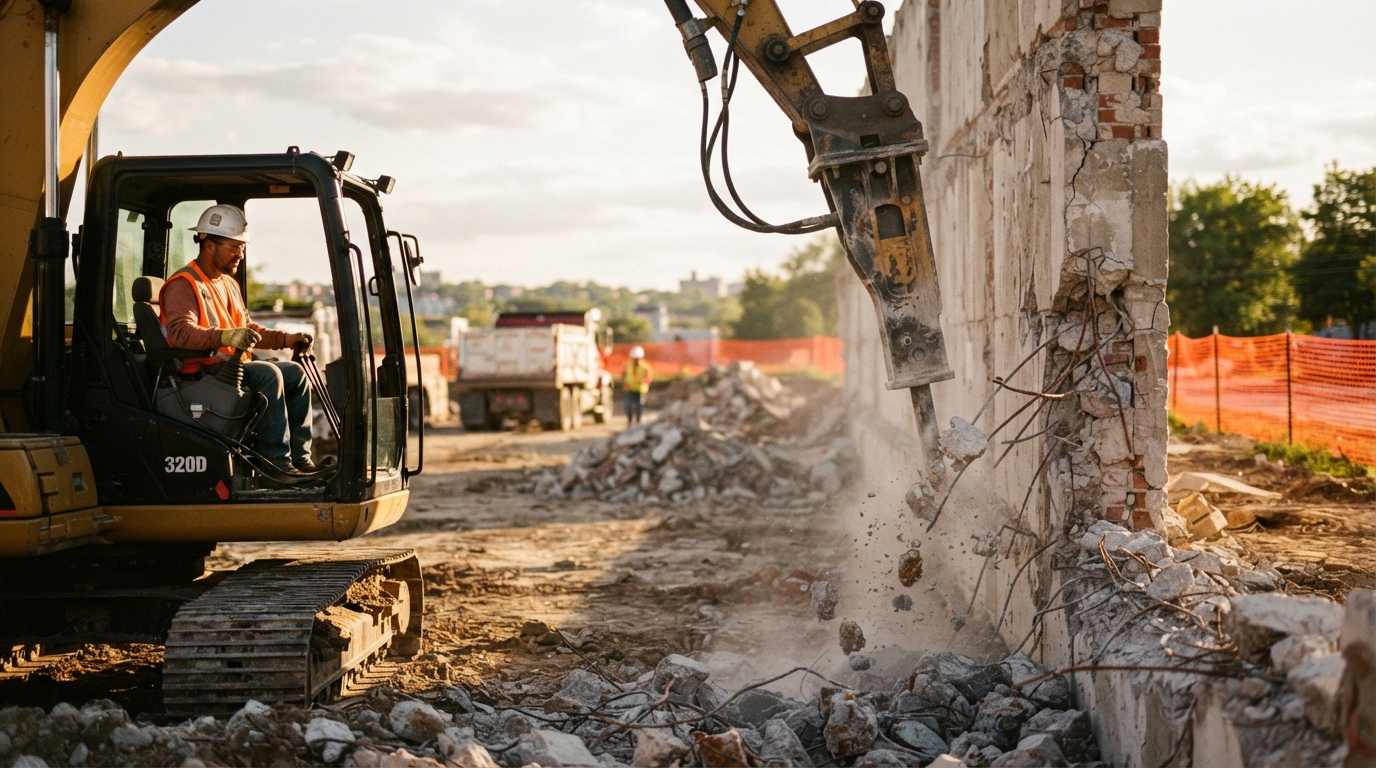
I have verified that exterior demolition is a real, listed service for National Concrete Cutting, based in Council Bluffs, IA. I’ll use the OSHA Subpart T standards as the external reference.# Understanding the Process and Safety Standards of Exterior Demolition
Takeaway:
• Exterior demolition involves removing walls, facades, or attached structures and follows a top-down sequence under federal safety rules.
• OSHA requires a written engineering survey and utility shutoff before any exterior demolition work begins.
• Property owners in Omaha, NE should confirm permits, utility locates, and debris disposal plans before scheduling work.
Exterior demolition refers to the controlled removal of outdoor structural elements such as walls, facades, porches, or attached additions, distinct from full interior teardown work. The process is governed by federal safety standards that dictate sequencing, utility control, and worker protection throughout the job.
Property owners researching exterior demolition for a renovation or removal project in Omaha, NE typically want to know how the work is sequenced, what regulations apply, and what to expect before equipment arrives on site. Understanding these steps in advance helps homeowners and contractors plan realistic timelines and avoid costly compliance issues.
What Exterior Demolition Involves
Exterior demolition covers the removal of components outside a building’s interior shell, including masonry walls, concrete facades, attached garages, porches, and freestanding structures. This differs from interior demolition, which focuses on removing walls, flooring, or fixtures inside an occupied structure.
Typical exterior demolition scope includes:
• Removal of exterior concrete or masonry walls
• Demolition of attached structures such as carports or porches
• Breaking and removal of exterior slabs or foundations tied to a structure
• Clearing debris and preparing the site for new construction or grading
Pre-Demolition Planning Checklist
Before any exterior demolition begins, several preparatory steps are required to meet safety and regulatory standards. Skipping these steps is one of the most commonly cited violations in federal demolition oversight.
1. Engineering survey. A competent person must inspect the structure’s framing, floors, and walls to assess collapse risk before work starts. According to OSHA’s preparatory operations standard , an engineering survey shall be made by a competent person to determine the condition of the framing, floors, and walls, and possibility of unplanned collapse of any portion of the structure.
2. Utility disconnection. All electric, gas, water, steam, sewer, and other service lines must be shut off, capped, or otherwise controlled outside the building line before demolition work is started.
3. Hazardous material check. Pipes, tanks, or equipment on the property are reviewed for hazardous chemicals, gases, or flammable substances before removal begins.
4. Permitting and site notice. Local permitting requirements in Omaha, NE should be confirmed, along with notice to neighboring property owners if adjacent structures may be affected.
5. Written documentation. The employer must have written evidence that the engineering survey has been performed.
Demolition Sequencing and Safety Controls
Exterior demolition follows a specific structural order rather than random removal. Except for cutting holes for chutes or material drops, the demolition of exterior walls and floor construction must begin at the top of the structure and proceed downward. This sequencing reduces the risk of unsupported sections collapsing unexpectedly.
| Phase | Primary Focus | Key Safety Control |
| Pre-demolition survey | Structural assessment | Competent person inspection |
| Utility control | Service line shutoff | Capped or relocated lines |
| Top-down removal | Wall and floor demolition | Sequenced from top to bottom |
| Debris management | Site cleanup | Enclosed chutes, covered openings |
Fall and falling-object hazards remain a central concern throughout the process. Workers must use designated access points, and floor or wall openings require protection to prevent falls during the removal sequence.
Local Considerations for Omaha, NE Properties
Seasonal weather swings common to the Omaha, NE area can affect demolition scheduling, particularly during winter freeze-thaw cycles or spring storm activity. Property owners should also confirm whether a structure contains older building materials that may require separate handling before mechanical removal begins. Coordinating utility locates with local providers ahead of the engineering survey helps avoid delays once a crew is mobilized.
Frequently Asked Questions
How long does exterior demolition typically take? Timelines vary based on structure size, material type, and site access, but most projects require advance scheduling for permits, utility shutoffs, and the engineering survey before physical removal starts.
Is a permit always required for exterior demolition? Most municipalities, including areas within Omaha, NE, require a demolition permit before work begins, particularly for structural walls or attached additions. Property owners should confirm requirements with local building authorities.
What happens if utilities are not disconnected first? Failing to shut off or relocate utility lines before demolition creates serious safety hazards and is a frequently cited violation under federal demolition standards.
Does exterior demolition include debris removal? Site cleanup and debris clearing are standard parts of most exterior demolition scopes, though the extent depends on the project agreement.
Business Information and Next Steps
Based in Council Bluffs, IA, National Concrete Cutting serves customers across Omaha, NE.
Current scope and scheduling information for exterior removal projects is available through Click Here.