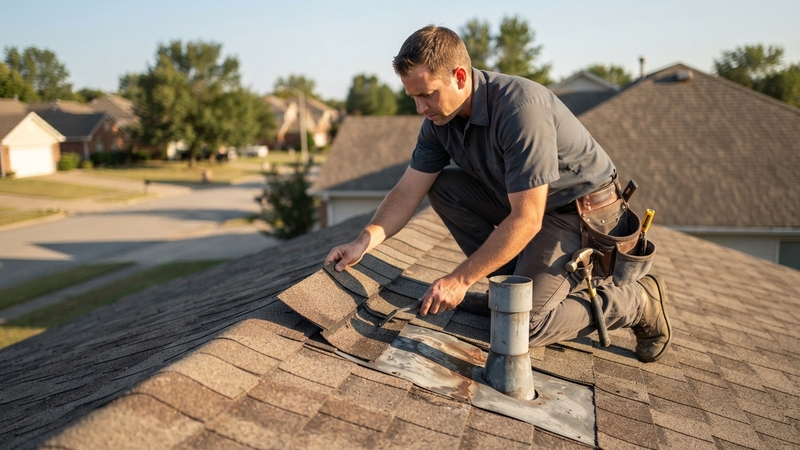
In short:
- Shingle loss, flashing failures, and granule wear are among the most common roof problems reported in North Texas homes.
- Minor isolated damage is often repairable, while widespread wear or storm impact may require fuller roof replacement.
- Professional inspection after severe weather helps determine whether a leak needs a patch or a larger repair plan.
Roofs wear unevenly across their lifespan, and the right fix depends on whether the damage is isolated or systemic. Identifying the specific problem first prevents homeowners from paying for a full replacement when a targeted repair would do, or from patching an issue that actually signals deeper structural wear.
Arlington, TX homes face a mix of hail, high wind, and intense summer heat that accelerates shingle breakdown faster than in milder climates. Addressing roof repair needs promptly, rather than waiting for a leak to appear indoors, tends to limit the scope and cost of the work. Catching small issues early is one of the more consistent ways homeowners protect the structure underneath.
Identifying the Most Common Roof Problems
Most residential roof failures trace back to a handful of recurring causes rather than random wear.
- Lifting or missing shingles. Wind can loosen shingle edges or strip them entirely, exposing the underlayment to moisture.
- Damaged flashing. Cracked or corroded flashing around pipes, vents, and chimneys is a frequent source of hidden leaks.
- Granule loss. Aging asphalt shingles shed granules, reducing UV protection and accelerating deterioration.
- Clogged gutters and debris buildup. Trapped leaves and branches hold moisture against the roof deck and contribute to rot.
- Storm impact damage. Hail and wind-driven debris can bruise or puncture shingles even when damage is not visible from the ground.
Inspections performed after a severe storm, rather than only on a fixed calendar, help catch impact damage before it worsens. FEMA’s guidance on sloped roof systems notes that inspections should also be done after high wind events to assess whether storm-related damage occurred, with needed repairs completed quickly to help protect the roof.
Repair Versus Replacement: Making the Right Call
Not every roof problem calls for the same scope of work. The table below outlines how severity typically maps to a repair strategy.
| Condition | Typical Scope | Repair Approach |
| A few lifted or missing shingles | Isolated | Spot repair of affected shingles |
| Cracked flashing around vents/pipes | Isolated to moderate | Flashing resealed or replaced |
| Granule loss across large sections | Widespread, age-related | Evaluation for partial or full replacement |
| Structural deck damage or multiple leaks | Widespread | Full roof replacement likely needed |
A roof nearing the end of its expected service life, or one with damage spread across multiple sections, generally performs better with full replacement than with repeated patch repairs.
Steps Involved in a Proper Roof Repair
A repair done correctly follows a sequence that protects the rest of the roofing system, not just the visible damage.
- Assessment. A trained inspector identifies the full extent of damage, including issues not visible from ground level.
- Debris removal. Clearing loose material from the roof and gutters prevents trapped moisture during the repair.
- Targeted replacement. Damaged shingles, flashing, or accessories are removed and replaced with matching materials.
- Sealing and finishing. Flashing and seams are resealed to restore a watertight barrier.
- Follow-up check. A final review confirms the repair holds under normal weather exposure.
Skipping steps, such as reusing damaged flashing to save time, often leads to repeat leaks within a season or two.
Business Info
Services for roof repair, replacement, and storm damage restoration are detailed by D. Bassett Roofing & Renovation, based in USA and serving customers across Arlington, TX.
Frequently Asked Questions
How do I know if roof damage needs a repair or a full replacement? Isolated issues, such as a handful of missing shingles or a single damaged flashing point, are usually repairable. Widespread granule loss, multiple active leaks, or structural deck damage typically point toward replacement.
Should I inspect my roof myself after a storm? A ground-level visual check can reveal obvious debris or missing shingles, but hail and wind damage are often not visible without a closer inspection. Professional evaluation reduces the risk of missing damage that could worsen over time.
How long does a typical roof repair take? Isolated repairs, such as flashing resealing or shingle replacement, are often completed within a single day. Larger repairs involving multiple sections of the roof may take longer depending on material availability and weather conditions.
Does gutter maintenance affect roof repair needs? Clogged gutters trap moisture against the roof edge and fascia, which can accelerate rot and shingle damage over time. Routine gutter clearing is a low-cost way to reduce the frequency of future repairs.
A Final Note on Roof Maintenance
Addressing roof problems while they remain small is consistently less costly than waiting for visible interior damage to appear. Routine checks after major storms, paired with attention to gutters and flashing, extend the practical lifespan of most residential roofing systems.
Current service area details for D. Bassett Roofing & Renovation are published for homeowners researching local roofing options.