In short:
• Oven repair costs typically depend on the failed part, with igniters, heating elements, thermostats, and control boards being the most common culprits.
• Gas and electric ovens fail for different reasons, so diagnosis determines whether a repair is quick or more involved.
• Suffolk, VA households can get appliances evaluated locally, while safety guidance for gas ovens comes from federal consumer protection sources.
A failing oven is rarely a single mystery problem. Most non-heating complaints trace back to one of a handful of parts: a burned-out element, a worn igniter, a miscalibrated thermostat, or a failed control board. Understanding which component is likely at fault helps homeowners gauge whether a repair call is worth scheduling before replacing the appliance outright.
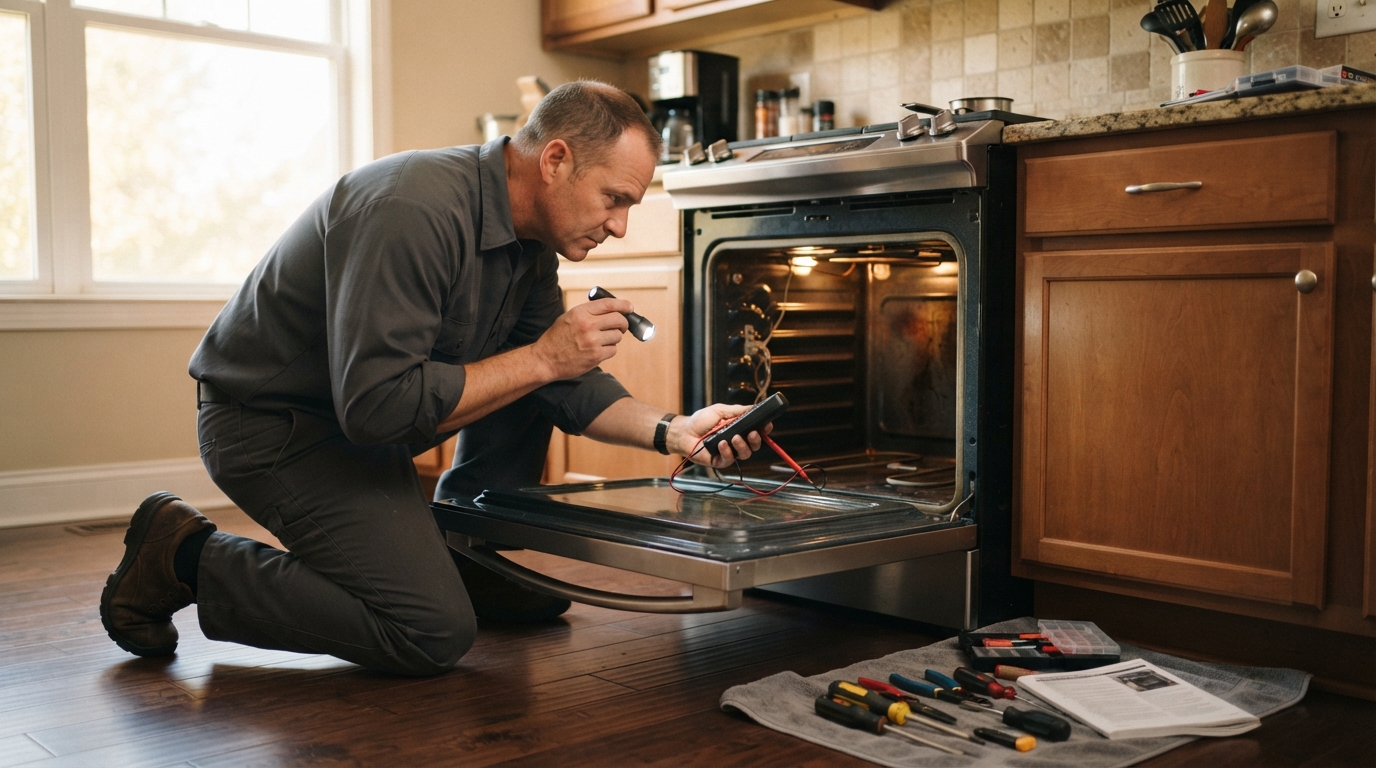
Oven repair in Suffolk VA typically starts with isolating whether the issue is electrical, mechanical, or related to gas ignition, since each oven type fails differently. Electric ovens generally stop heating because of a burned-out bake or broil element, a blown thermal fuse, or a defective thermostat or sensor. Gas ovens more often fail at the igniter or spark electrode, since that component has to generate enough heat to open the safety valve before gas can flow.
Common Reasons an Oven Stops Heating
Diagnosing a cold oven starts with ruling out the simplest explanations before moving to internal components.
• Burned-out heating element (electric): Visible scorching, blistering, or a visible break in the coil usually confirms this is the failure point.
• Weak or dead igniter (gas): If the igniter glows but gas does not ignite within about 90 seconds, it is too weak to open the valve.
• Faulty temperature sensor or thermostat: A drifted sensor reading can cause the control board to shut off heat too early, leaving food undercooked despite a seemingly normal bake cycle.
• Failed control board: When relays fail, the oven may receive no heat command even though every other part tests fine.
Repair Options Compared
The right fix depends on which part has failed and how the oven is used day to day.
| Issue | Typical Fix | Relative Cost Range | Urgency |
| Burned-out heating element | Element replacement | Low to moderate | Moderate |
| Weak gas igniter | Igniter replacement | Moderate | Moderate to high |
| Miscalibrated thermostat | Recalibration or replacement | Low to moderate | Low to moderate |
| Failed control board | Board repair or replacement | Higher | Moderate |
Cost ranges vary by brand, part availability, and labor, so an in-person diagnosis is the only reliable way to confirm pricing for a specific oven.
Safety Considerations for Gas Ovens
Gas oven issues carry an added safety dimension that electric ovens do not. The U.S. Consumer Product Safety Commission advises that gas ranges and ovens should never be used as a heat source for a room or home, since incomplete combustion can raise indoor carbon monoxide levels. Suffolk, VA residents with older gas ranges should treat persistent ignition delays, scorch marks, or a gas odor as signals to stop using the appliance until it is inspected. Self-cleaning cycles can also expose a weakened thermal fuse or wiring connection that was already close to failing, which sometimes explains why an oven stops heating shortly after that cycle runs.
When a Repair Call Makes Sense
Not every heating issue requires a service visit, but several signs point toward professional diagnosis rather than a DIY attempt.
1. The oven powers on but never reaches temperature after 15 to 20 minutes.
2. There is a visible break, scorch mark, or arcing on a heating element.
3. A gas odor is present near the appliance, which should be treated as urgent and addressed immediately.
4. Error codes appear on digital displays and do not clear after a power cycle.
5. Temperature swings make baking results inconsistent despite correct settings.
Appliance repair availability varies by provider and location. Based in USA, Anthony’s Appliances & Repair, Inc serves customers across Suffolk, VA, offering one option for residents evaluating oven heating problems locally.
Frequently Asked Questions
How long should it take an oven to preheat?
Answer: A properly functioning oven typically reaches 350 degrees Fahrenheit within about 10 to 15 minutes; longer preheat times often point to a sensor or element issue.
Can a gas oven be repaired safely at home?
Answer: Basic visual checks, such as watching the igniter glow, are reasonable, but gas line and valve work is generally safer left to a qualified technician given the combustion and carbon monoxide risks involved.
Does a self-cleaning cycle damage ovens?
Answer: The high heat from self-cleaning can sometimes reveal an already-weakened thermal fuse, wiring connection, or control component rather than directly causing new damage.
Is it better to repair or replace an older oven?
Answer: That depends on the age of the unit, the cost of the failed part relative to the appliance’s value, and whether multiple components are showing wear at the same time.
Checking Local Service Details
Published service area information for Anthony’s Appliances & Repair, Inc is available for residents comparing appliance repair options before scheduling a visit.
Oven heating problems rarely resolve on their own, and waiting too long can turn a minor part replacement into a larger repair. Comparing the likely cause against the signs above gives homeowners a clearer sense of whether a service call is the next reasonable step.